OpenAI GPT-5.6-Sol: Premium Multimodal AI at $30/M Output Tokens
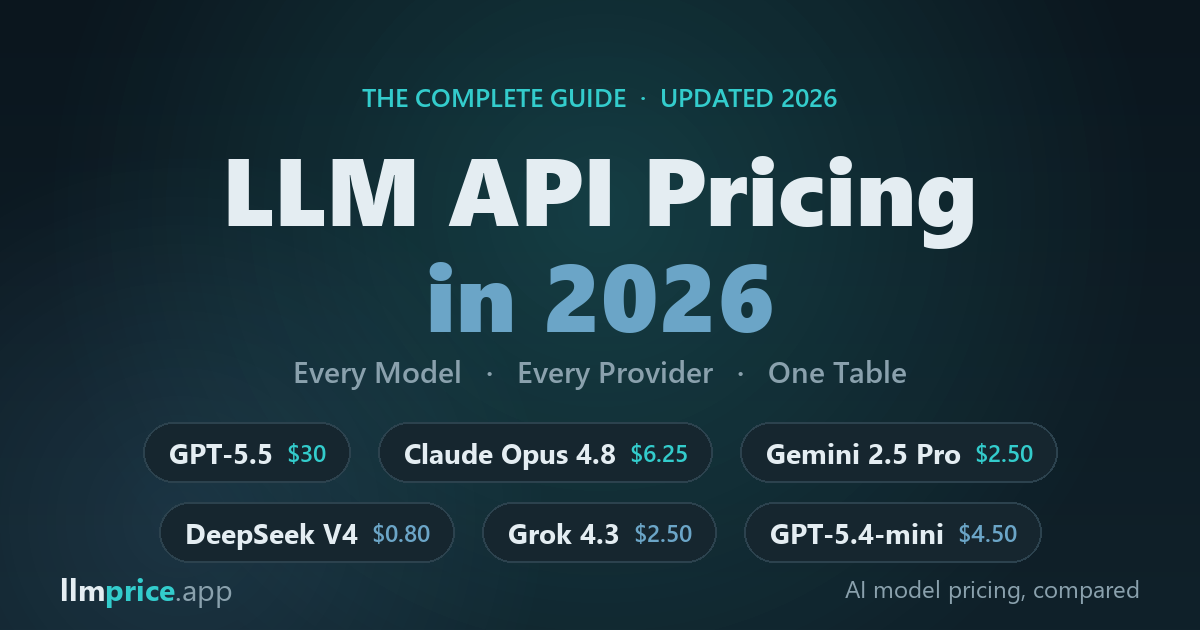
OpenAI's Premium Play: GPT-5.6-Sol Targets High-Value Enterprise Workloads
OpenAI has released GPT-5.6-Sol, a premium multimodal AI model that commands the highest output pricing in their lineup at $30.0 per million tokens. With a composite benchmark score of 98/100 and a massive 1,049,000-token context window, this model positions itself as OpenAI's flagship for complex reasoning, advanced coding, and multimodal tasks where quality trumps cost considerations.
The model's pricing strategy signals a clear departure from OpenAI's volume-focused offerings, instead targeting enterprise customers with sophisticated AI requirements who can justify the 6x premium over typical output rates. At 85 tokens per second with text, vision, and audio capabilities, GPT-5.6-Sol represents OpenAI's most capable—and expensive—commercial offering to date.
Technical Specifications
| Specification | Value |
|---|---|
| Input Price | $5.0/1M tokens |
| Output Price | $30.0/1M tokens |
| Context Window | 1,049,000 tokens |
| Speed | ~85 tokens/sec |
| Quality Score | 98/100 |
| Modalities | Text, Vision, Audio |
| Latency | Medium |
Price Analysis: OpenAI's Premium Tier Strategy
GPT-5.6-Sol's $30.0/1M output tokens represents a significant premium within OpenAI's model family. While we cannot compare exact figures for other OpenAI models without additional data, this pricing positions the model firmly in enterprise territory where cost-per-token matters less than absolute capability and reliability.
The $5.0/1M input rate creates a 6:1 output-to-input price ratio, indicating OpenAI expects this model to be used for tasks requiring substantial generation rather than simple analysis. This pricing structure makes economic sense for applications like comprehensive code generation, detailed technical documentation, or complex multimodal analysis where the output value far exceeds the token cost.
For context, at these rates, generating a 10,000-token technical report would cost approximately $300 in output tokens alone—pricing that targets customers building high-value AI applications rather than consumer chatbots or basic automation.
Ideal Use Cases: Where Premium Performance Justifies Premium Pricing
GPT-5.6-Sol's specifications create clear use case advantages in specific scenarios. The 1,049,000-token context window enables analysis of entire codebases, comprehensive document processing, or maintaining context across extended conversations—capabilities that justify the premium for enterprise customers.
Enterprise software development represents a prime use case, where the model's 98/100 benchmark score and coding specialization can generate complete applications or perform comprehensive code reviews within the massive context window. A single session could analyze and refactor an entire microservice codebase without losing context.
Multimodal business intelligence applications benefit from the text, vision, and audio capabilities combined with the large context window. Processing quarterly reports with embedded charts, analyzing presentation recordings with slide content, or generating comprehensive market research from mixed media sources all leverage the model's full capability stack.
Advanced reasoning tasks in fields like legal analysis, scientific research, or strategic planning can utilize the 98/100 quality score and extended context to process complex, interconnected information that would overwhelm smaller models or require expensive prompt engineering workarounds.
Strengths and Weaknesses
| Strengths | Weaknesses |
|---|---|
| 98/100 benchmark score delivers top-tier quality | $30/1M output tokens limits volume applications |
| 1,049,000-token context window handles massive inputs | Medium latency at 85 tokens/sec slower than speed-optimized models |
| Full multimodal support (text, vision, audio) | 6:1 output-to-input price ratio expensive for analysis-heavy tasks |
| Specialized for reasoning and coding tasks | Premium pricing requires high-value use cases for ROI |
| Large context eliminates complex prompt engineering | Cost structure prohibitive for experimentation or development |
Recommendation: Premium Model for Premium Applications
GPT-5.6-Sol succeeds as a specialized tool for enterprise customers with specific, high-value AI requirements. The 98/100 benchmark score and 1M+ token context window create genuine competitive advantages for complex reasoning, comprehensive coding tasks, and sophisticated multimodal analysis.
However, the $30.0/1M output pricing demands careful cost-benefit analysis. Organizations should evaluate whether their use cases can generate sufficient value to justify the premium, or whether alternative models might deliver adequate results at lower cost points.
For teams building mission-critical AI applications where quality and context retention are paramount, GPT-5.6-Sol represents OpenAI's most capable offering. For cost-sensitive applications or high-volume deployments, the pricing structure makes this model economically impractical.
Calculate Your GPT-5.6-Sol Costs
Use our calculator to estimate monthly costs based on your expected token usage patterns and compare with alternative models.
Calculate CostsFrequently asked questions
How much does it cost to process a 100,000-token document with GPT-5.6-Sol?
Input costs $500 (100,000 tokens × $5.0/1M) plus output costs depending on generation length. A 10,000-token summary would add $300 in output costs, totaling $800 for the complete task.
What makes the 1,049,000-token context window valuable?
This context window can hold approximately 800,000 words or 1,500+ pages of text, enabling analysis of entire books, large codebases, or comprehensive document sets without losing context or requiring expensive prompt engineering.
How does the 98/100 benchmark score compare to other models?
A 98/100 composite score represents top-tier performance across reasoning, coding, and multimodal tasks. This score indicates the model performs within 2% of theoretical maximum capability on standardized AI benchmarks.
Is 85 tokens/sec fast enough for real-time applications?
At 85 tokens/sec, the model generates approximately 5,100 tokens per minute or roughly 4,000 words per minute. This speed suits batch processing and complex analysis but may feel slow for interactive applications requiring immediate responses.